
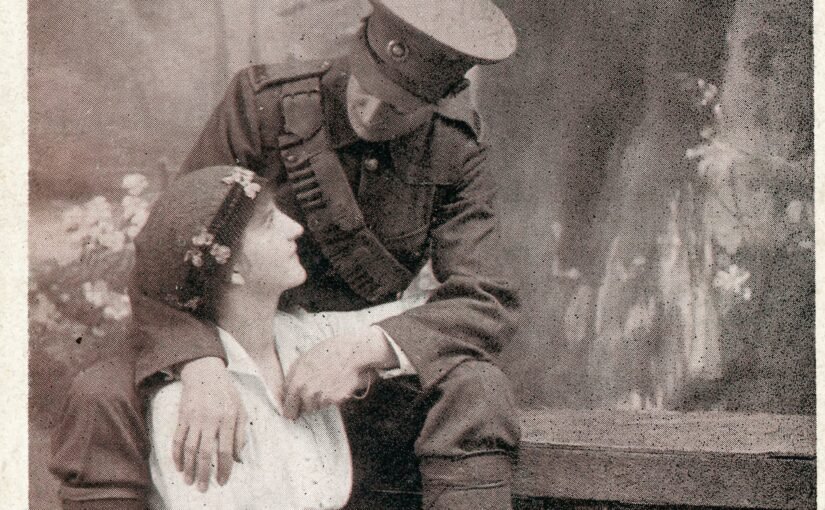
In January 2026, the Museum team delivered a talk for the Lewisham Local History Society presenting initial findings from the cataloguing of the Ken White Postcard Collection as part of the ‘Wish You Were Here’ project. This included showcasing some stories that the team had found, demonstrating examples of the fascinating narratives that will emerge as the project continues.
This following story demonstrates how, for some, service in the First World War did not see them in muddy Flanders, chalky Picardy, arid Palestine or alpine Italy – rather consigned by illness to home service as an agricultural labourer in the bucolic locales of Cambridgeshire and Suffolk, never far from home or their sweetheart.
Joseph Seal was born in 1896 in Soham, just outside of Ely in Cambridgeshire, the second youngest of 8 children born of Annie and Samuel Seal. In 1901 his father was working as a brick layer whilst he and his siblings lived in a house of at least 5 rooms, however by 1911 they had settled down on a nearby farm and were running it as a family. The 5 brothers, including Joseph, worked as farm hands for their father whilst Joseph’s 3 sisters had all gone to work as domestic servants, two of them still in Soham, one of them in London.
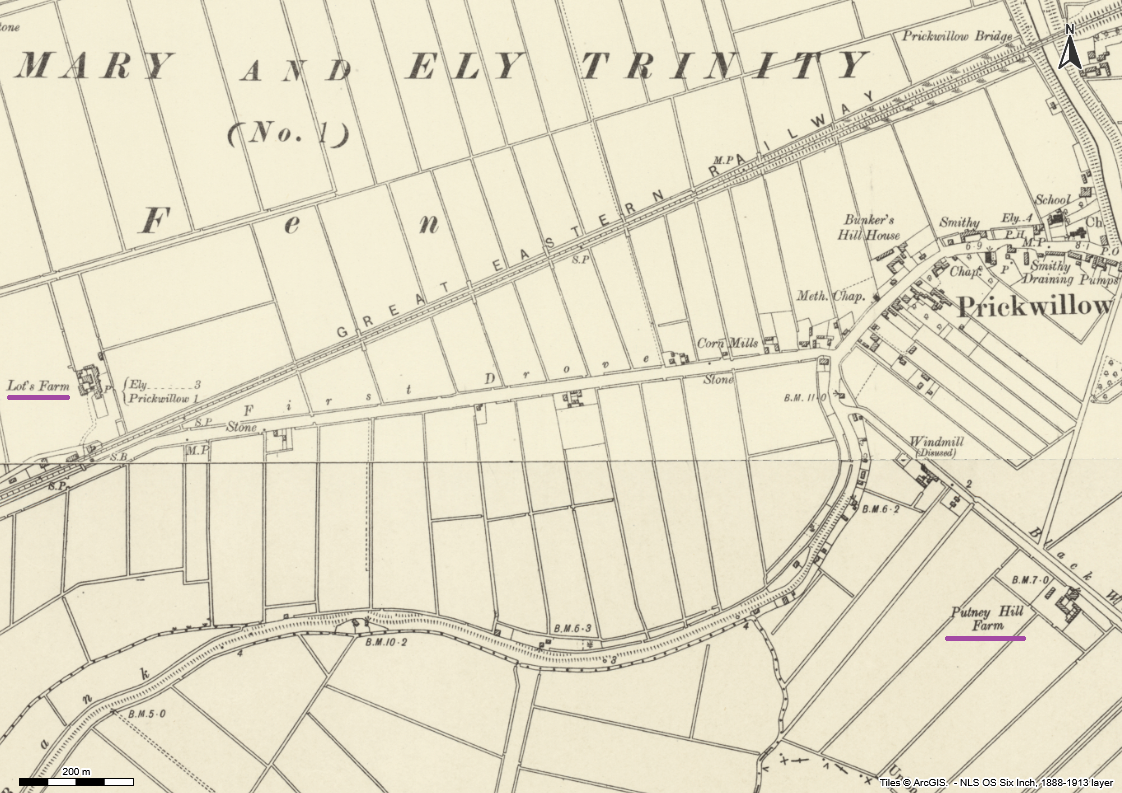
Ada Martin was also born in 1896 but on the other side of Ely in the village of Little Downham. By 1911 she had moved to another nearby village, Prickwillow, to work as a domestic servant on the Lots Farm. Around this time Joseph shifted away from the family farm and became a labourer at the Putney Hill Farm, also in Prickwillow. It would have been here that he and Ada met, perhaps a chance meeting on a country lane or with an exchange of furtive glances across the Church pews one Sunday morning.
As their love blossomed, storm clouds gathered over Europe and soon the continent was at war. Joseph, though, was evidently not fit for overseas service, as we shall see. As his service records survived the War Office records store firebombing, it is possible to piece together a complete picture of Joseph’s war.
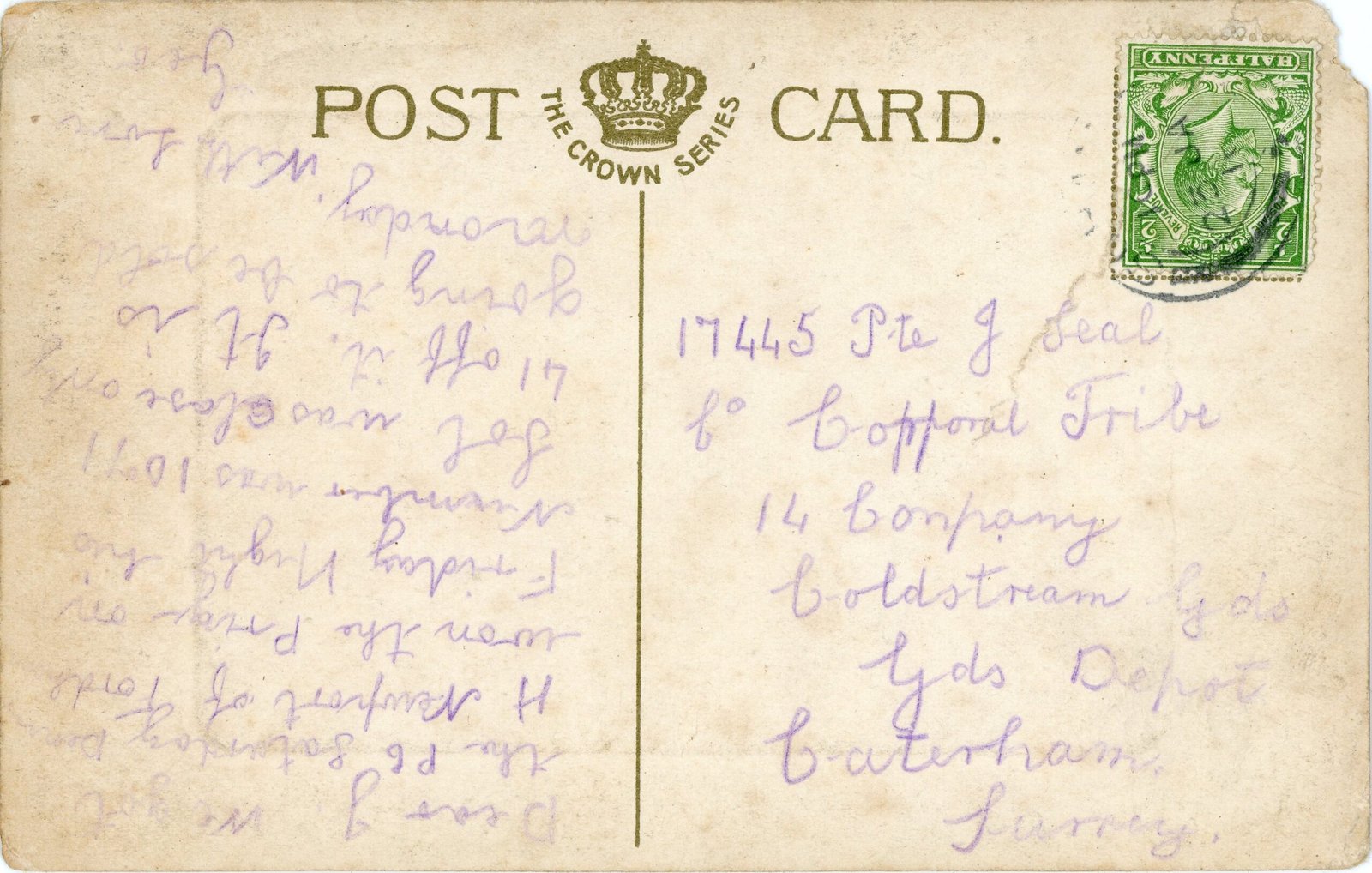
In November 1915 he attested at Newmarket, 19 years old, and was sent to the Guards Depot in Caterham, Surrey, to join the 5th Coldstream Guards. It is here that we encounter our first postcard, a brief message sent to Joseph by his brother George discussing prize winning at some unknown sports event, no doubt part of the regular chain of communication between the two.
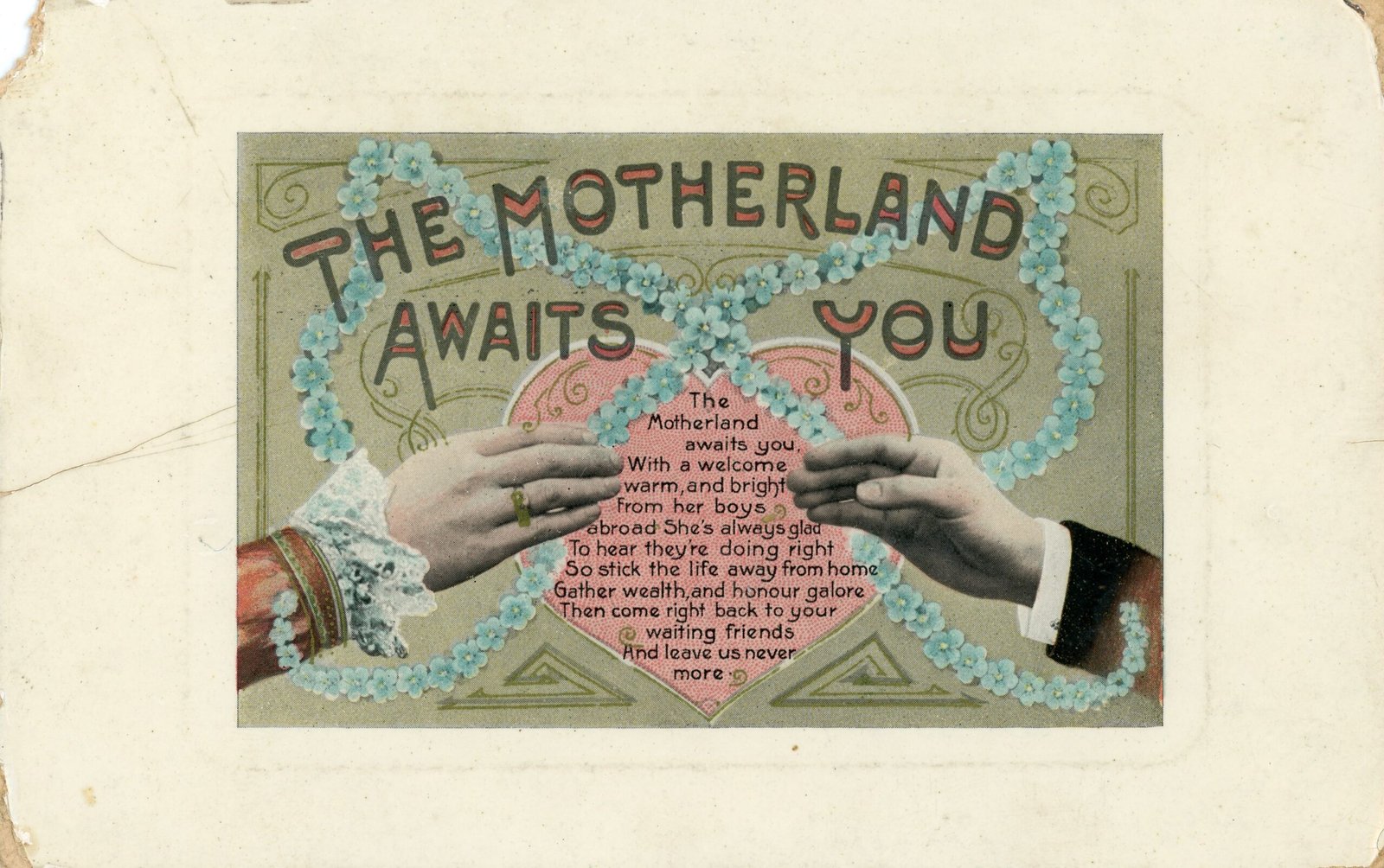
 Joseph was only here for a couple of months. It was quickly found that he was fit only for home service, i.e. garrison duties on the British mainland. As the Guards regiment had no garrison units, Guardsmen for home service were transferred to other regiments, and given the choice of which one to go to. Joseph chose the Loyal North Lancashire regiment, and the reasoning is quickly obvious. Based at Felixstowe, it was the closest he could secure garrison duties to his home and to Ada. He transferred there in February 1916. Upon arriving he sent a postcard to Ada which tells us the cause of his inability to go abroad:
Dearest Ada. Just a line or two hoping you are better as I keep thinking wondering how you are, my rheumatism is bad in my legs again tonight I expect it is the walking. It seems alright down here. I have not heard from Charlie [his friend] or seen him, I will write tomorrow as I no time tonight. With best love, Joe xxx
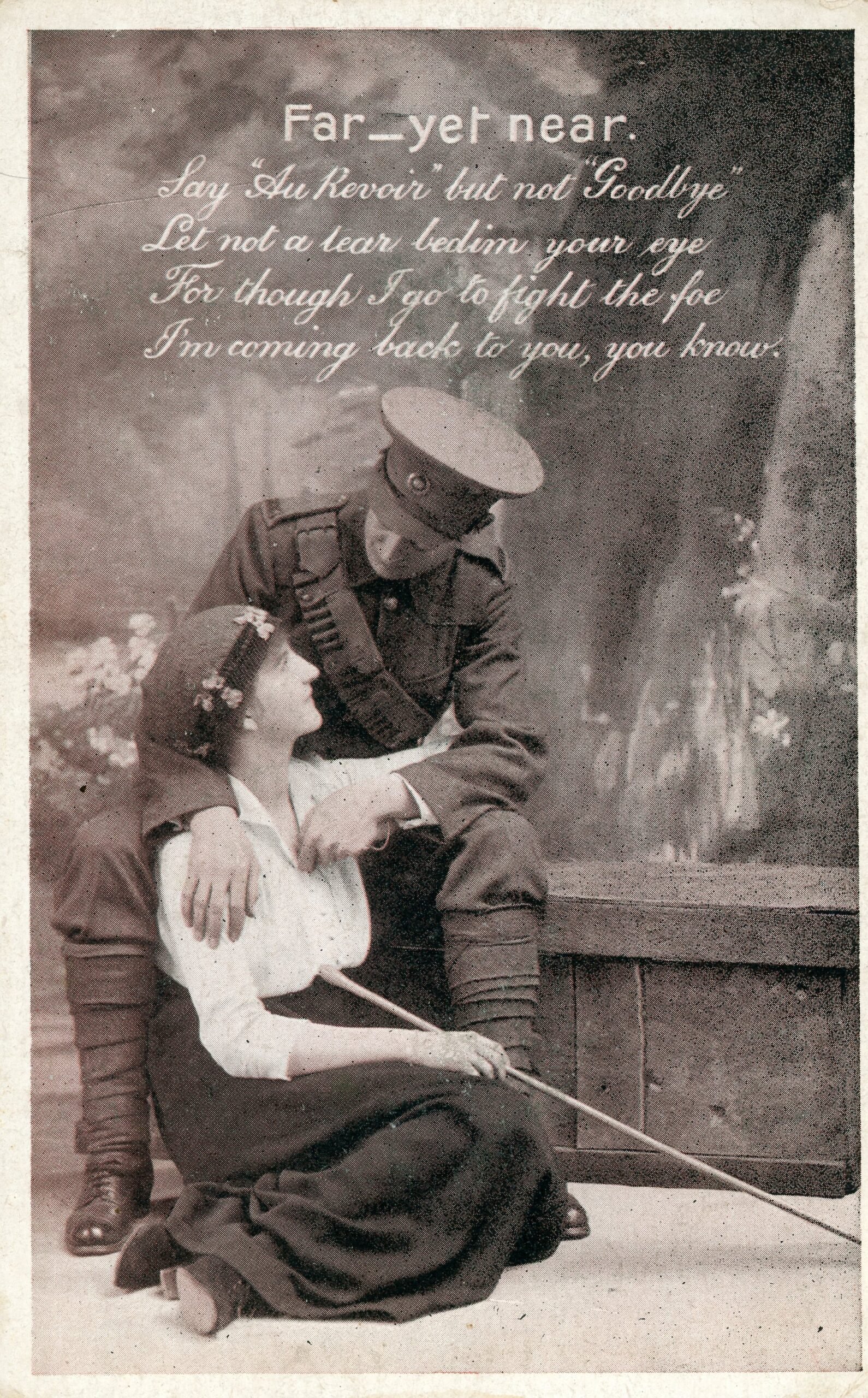
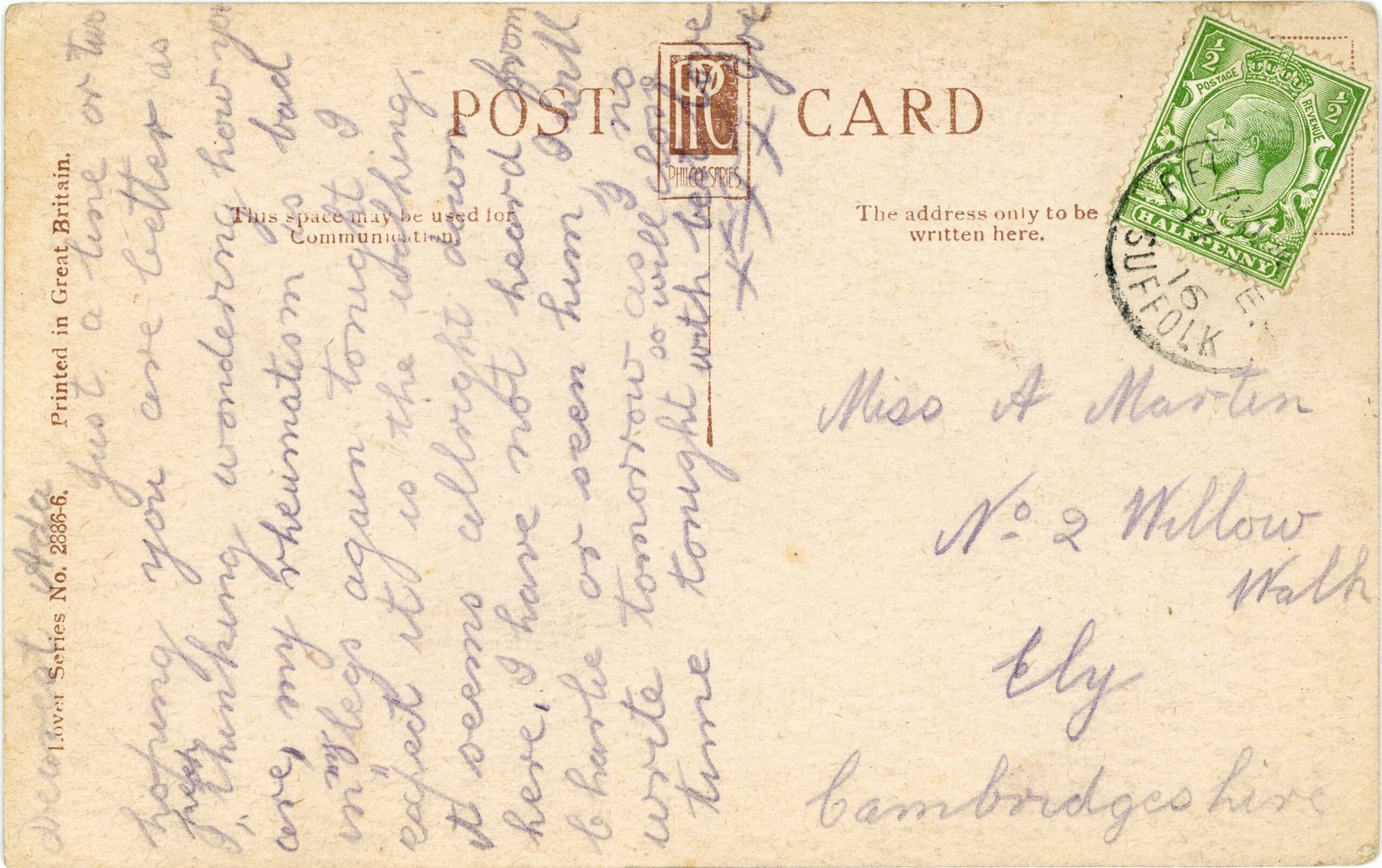 According to his medical and pension records, Joseph suffered with both rheumatism and ‘D.A.H.’ – disorderly action of the heart. Though both of these were attributed to his service the fact that his rheumatism materialised within weeks of him joining the Army suggests that he already struggled with it. If it were bad enough to keep him purely in garrison duty, then he likely had also been suffering previously in his day-to-day work as a farm labourer.
Joseph stayed with the 3rd Loyal North Lancashires in Felixstowe for a few months and wrote to Ada in mid-March:
Dearest Ada. Just a few lines hoping you and your mother are well as it leaves me and Charlie well at present. Well dear I had a letter from [his sister] Mary this morning she said she was house-keeper as mother was at Nellie’s at Haney so you can guess what for. Well dear Charlie and [I] have been to the spa this afternoon to hear the Band. I will write a letter tomorrow so will close with best love, Joe xxxxxx
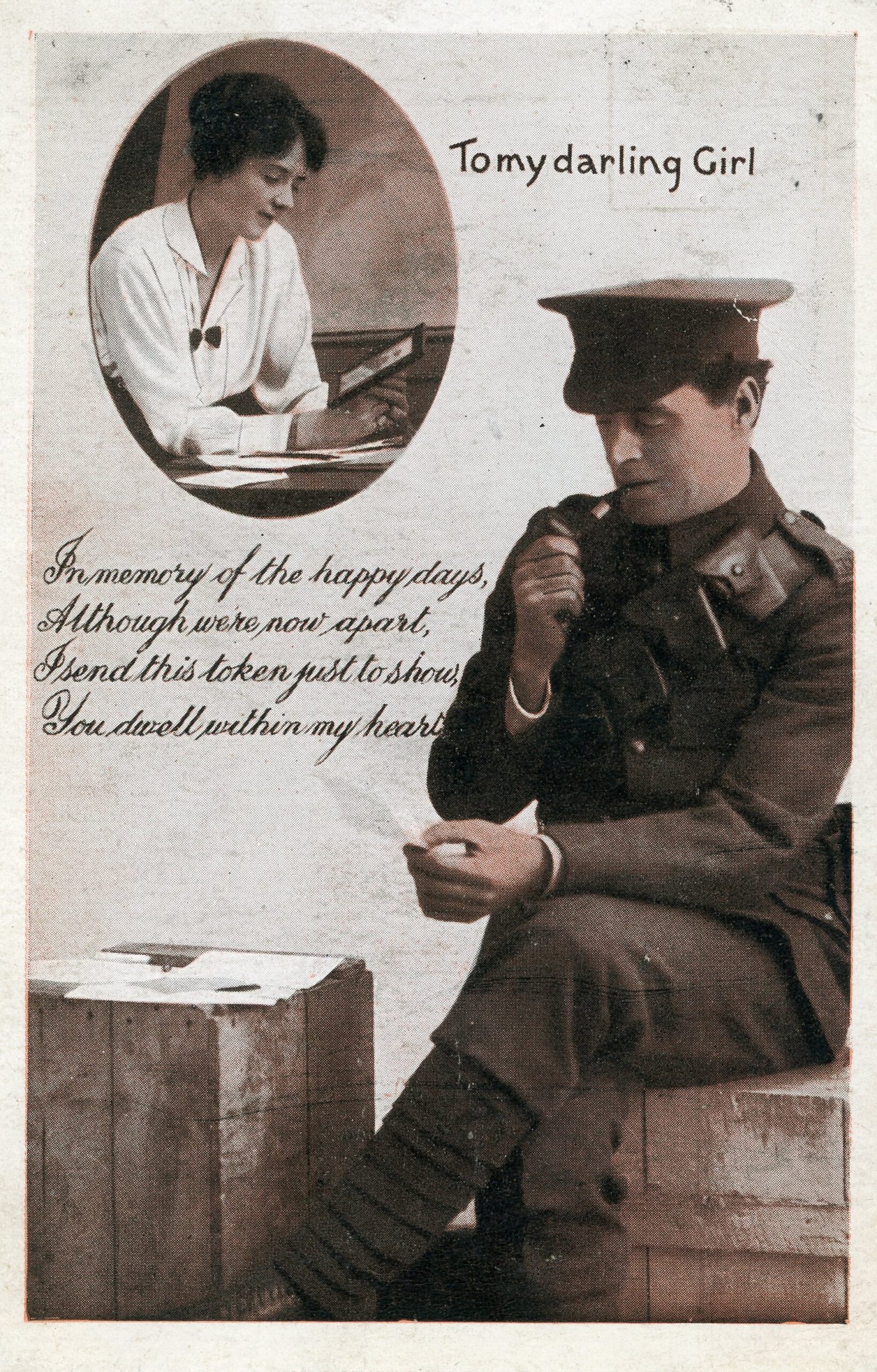
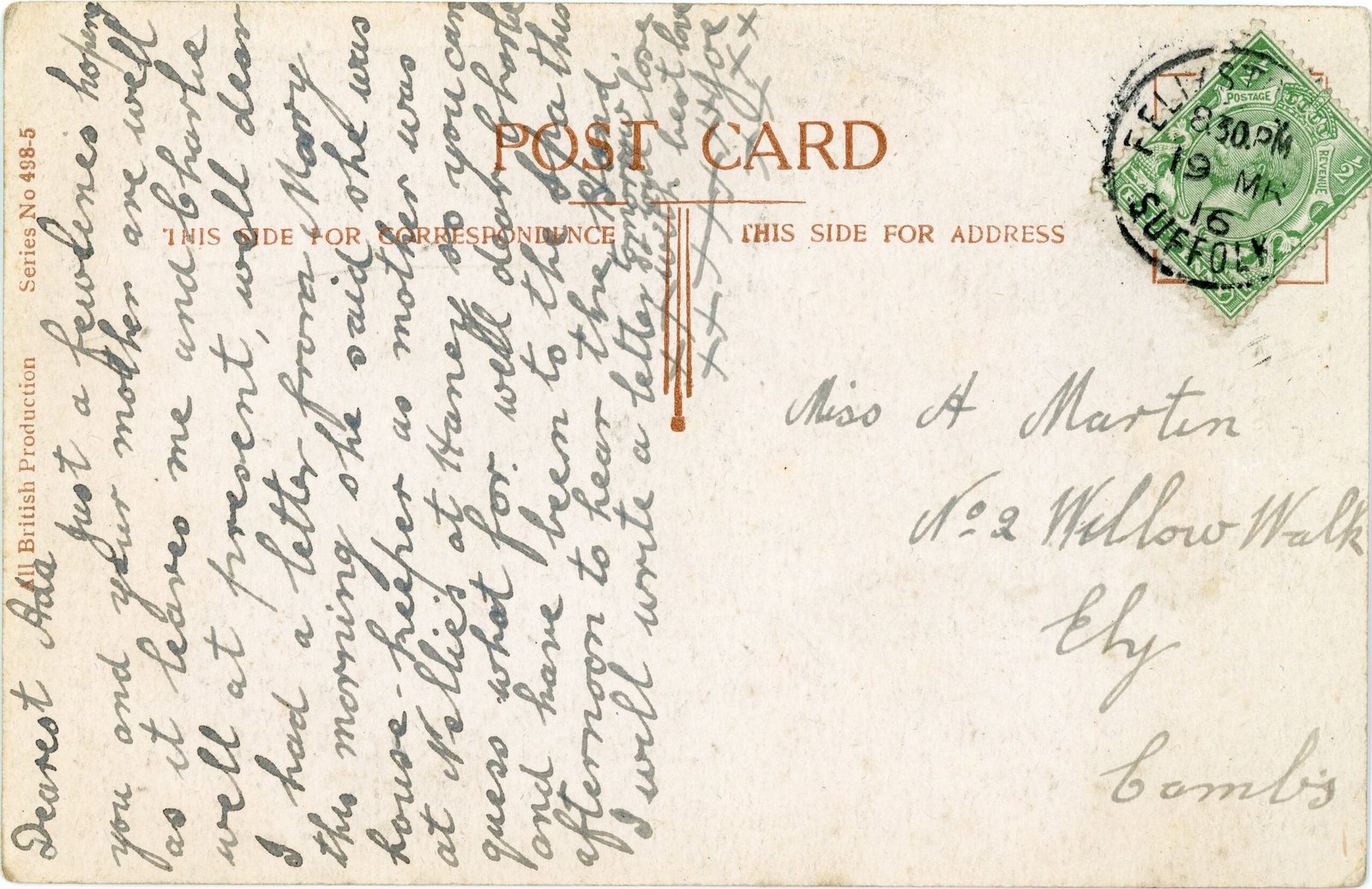 In May 1916 he was transferred to the 2nd Home Service Garrison Battalion of the Suffolk Regiment but this did not incur much change – he only moved to Harwich, literally just across the mouth of the River Stour from Felixstowe, less than a mile as the crow flies. Here he stayed for over a year, being attached variously to both Agricultural Companies and the Royal Defence Corps. Simply put, he was ploughing fields and guarding supply stores. With proximity to home, this may have even been a pleasant life, a far cry from the carnage across the Channel. He was likely going back to Ely (where Ada was now living) fairly regularly. Living so close, even an afternoon’s leave would have been enough time to get back to see Ada for a couple of hours. They almost certainly would have seen one another regularly.
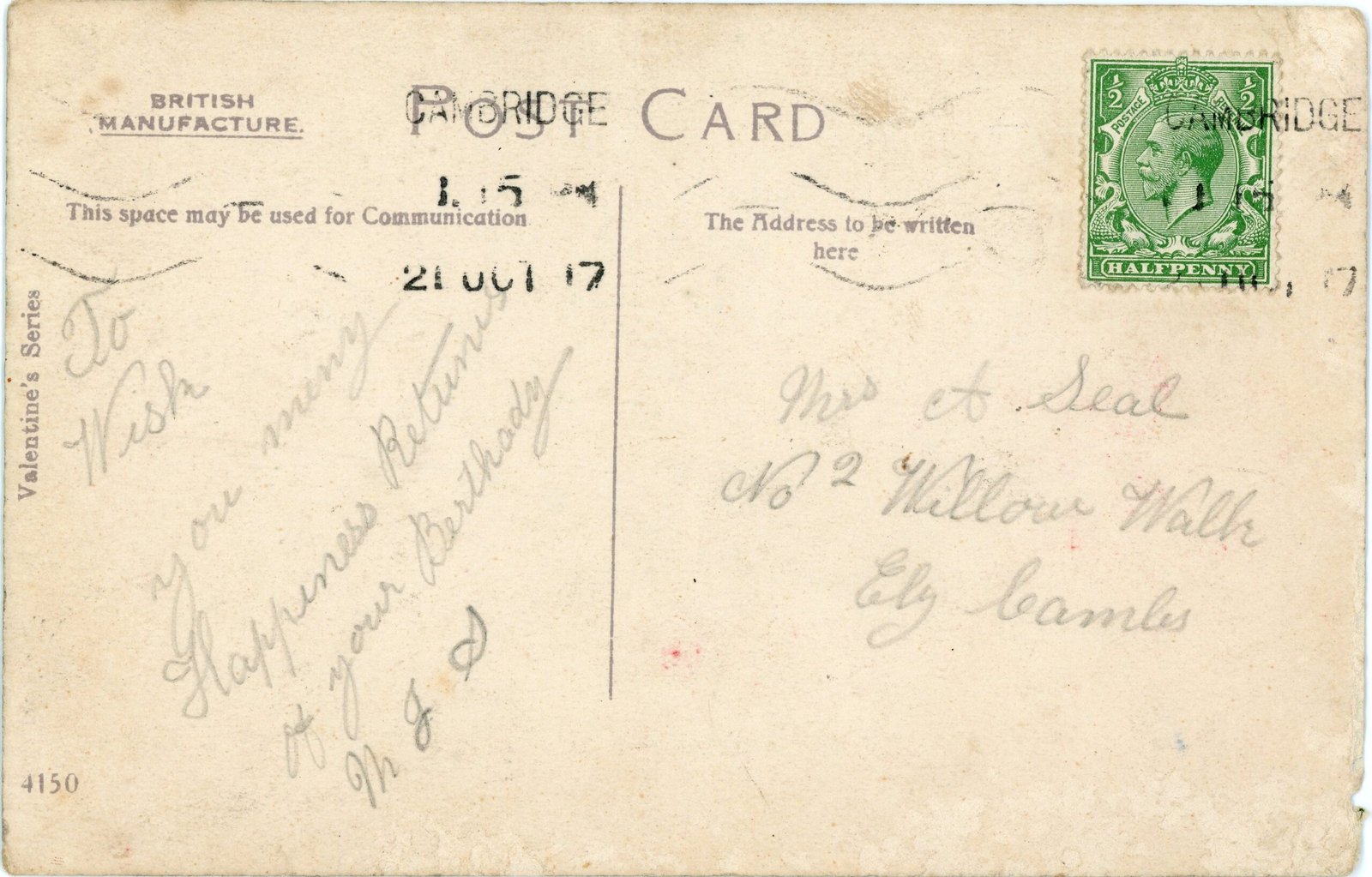
On 14 July 1917, the pair tied the knot and were married at the Holy Trinity Church, Ely. Ada became Mrs. Seal, as can be seen in another postcard.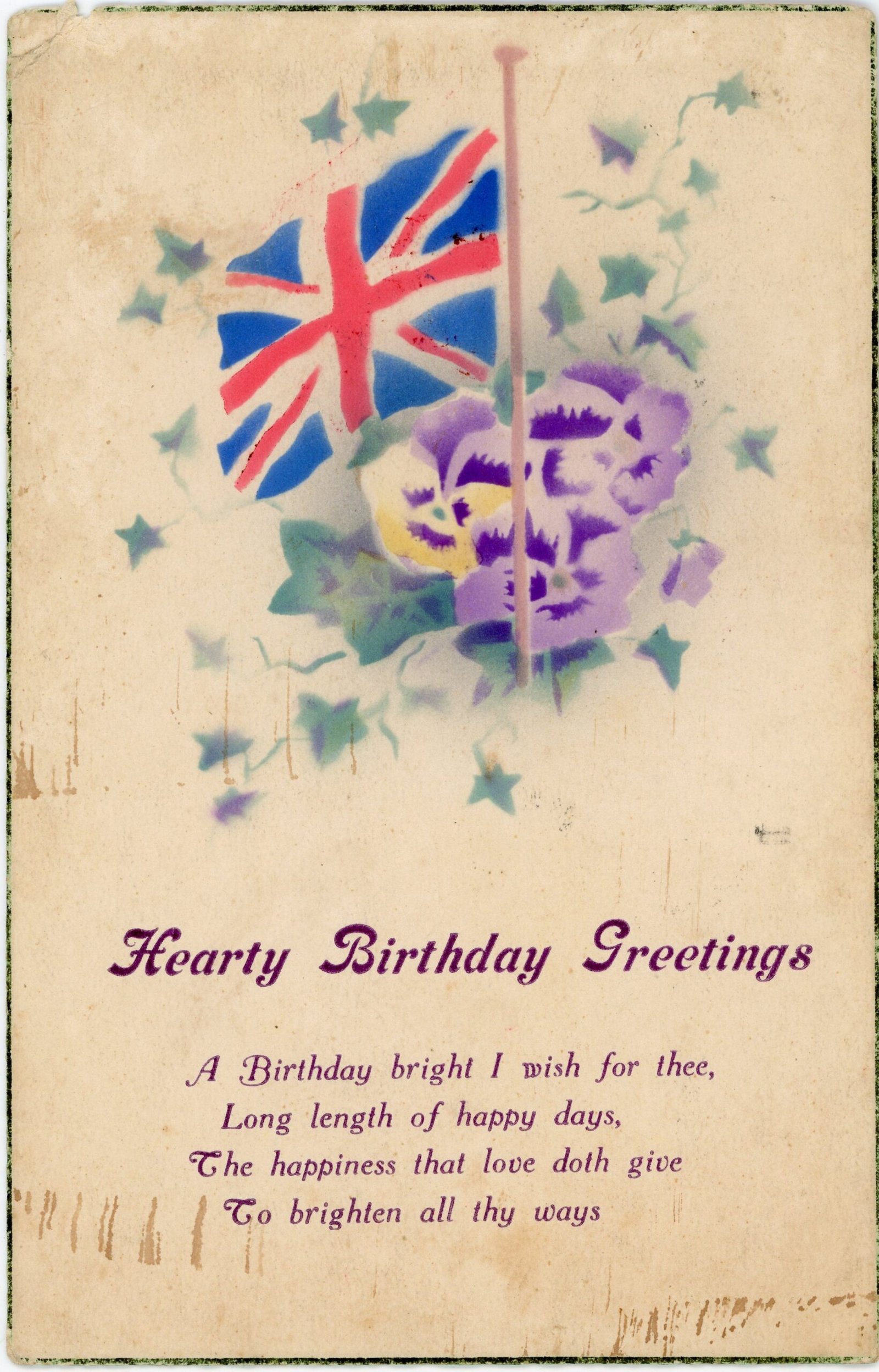
In December 1917 Joseph was transferred to 683 Agricultural Company of the Labour Corps which operated in the Eastern command sector of Britain, hence he continued to be very close to home. On 30 May 1918 Ada gave birth to a daughter, Doris May Seal, and Joseph almost certainly would have been there with her.
Whilst men were fighting and dying in droves in France and across the globe, it would be all to easy to look unfavourably on Joseph and his lot in the war. But to deign to such condescension is to play into harmful narratives of ‘valour’ and ‘courage’ measured against an individual’s ability to weather mortal slaughter. For many men like Joseph, dull garrison duties and base details were their entire war and we would do well to remember that these are everyday people like us whose experiences are just as historically valuable and informative for understanding the First World War as a frontline soldier.
Joseph was finally discharged in March 1919 and returned to Ely to live fully with his wife and daughter. Listed as medical category B2 at the time with a 30% ‘degree of disability’, he was given a weekly pension of 8s. 3d. and by 1921 was once again working as a farm labourer. Certainly an unusual experience of the war: at no point was he posted more than 100 miles from his home, and for the vast majority of the war he was in his home county! But this narrative is interesting and informative nonetheless, showing us how varied different individuals’ war experience could truly be.
Jude Pretoria, Assistant Curator