The Means of Production: Tools of the Trades from the 19th and 20th Centuries
This exhibition, and the research behind it, has been curated by Goldsmiths Library Assistant, Danny Reilly, as part of the Goldsmiths College ‘Civic Days Initiative‘. Danny spent his time at the Museum selecting, conserving, and researching objects in the collection for this exhibition.
What is a tool? The Cambridge online dictionary tells us tools are ‘a piece of equipment that you use with your hands to make or repair something’. However, tools are more than that. In use they become an extension of the arm, helping the user to carry out a task that could not otherwise be completed with hands alone. It would be impossible to drive a 4-inch nail into a solid oak beam with just your hands!
Today, tools are used in most spheres of work and life, making them everyday items. For example, the workers in the ‘Trades’ use tools as means of production, essential for earning a living. In the domestic environment, they can provide tenants and homeowners with a source of pride and a means of saving money by doing their own maintenance.
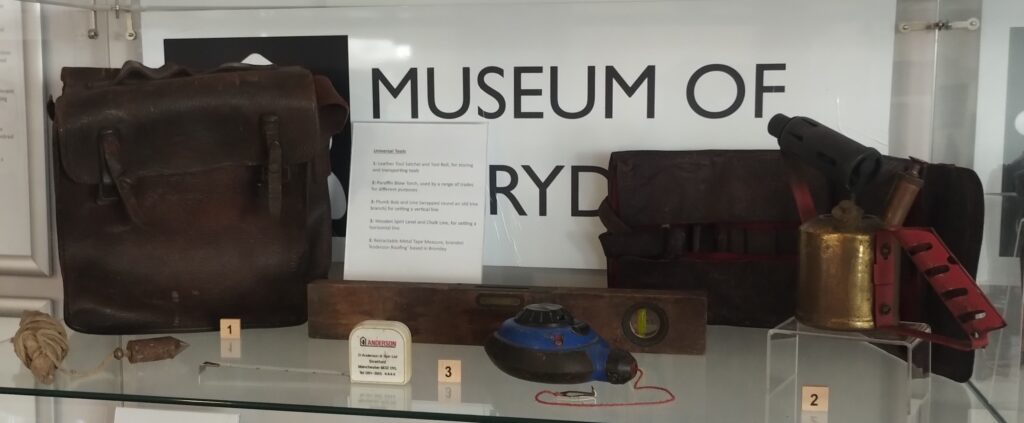
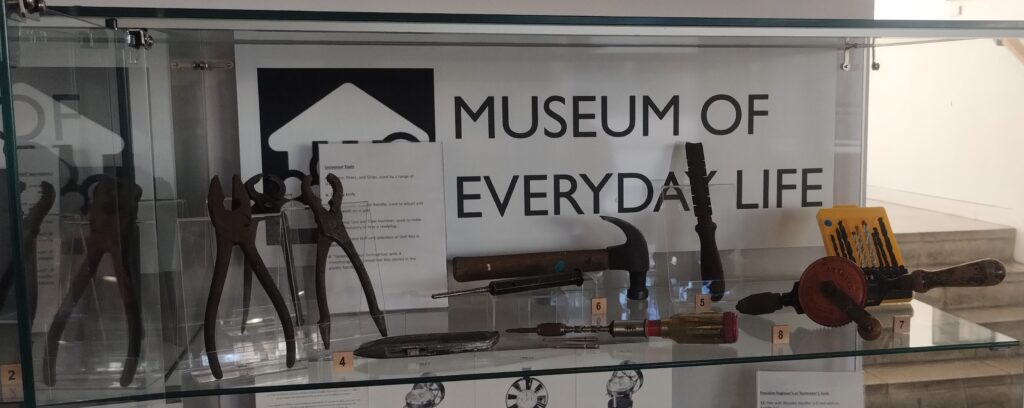
Most trades have primary tools specifically designed for the tasks of that trade. However, there are also tools that many different trades use, as reflected in this exhibition. For example, pipe cutters (primary) are specific to the plumber who may also carry a level and a rule, both tools that many other trades use (universal). That said, some tools can also have more than one function, like the blow torches used by plumbers to bond and seal copper pipes, and by decorators to burn off the excess layers of paint on timber.
Over time, tools also change. For example, the basic wooden handled saw has, over time, developed into the modern plastic handled multi-purpose saw, that also provides the extra function for marking timber with a 90-degree or a 45-degree angle! Does that decrease or eliminate the use of a marking square? In addition, the ratchet screwdriver in the exhibition has been superseded by the modern battery powered screwdriver. These are cheaply available to buy online and in most high street stores. Moreover, what about the future of tools? Will the tools of the past, and those today, become obsolete tomorrow?
With the rapid development of smart technology, tool manufacturers are directing their research and development in key areas: ‘Ergonomic design’ to minimise the various health problems of the user, such as repetitive strain injury. ‘Sustainability’ making a tool easy to repair by designing it with interchangeable parts. Durability’ using compositive materials in manufacturing to extend the life of a tool. ‘Connectivity’ such as Bluetooth, to enable data transfer and ultimately paths to improvement.
Dates: 7 May to 31 August 2026
Open: Every day from 9.00am to 9.00pm apart from Bank Holidays
Location: Goldsmiths Library Foyer (Rutherford Building), London, SE14 6NW
Entry: you do not need a library card to access the foyer and the exhibition is free and open to the public